
For most businesses, energy is one of the larger and more unpredictable costs to budget for. Unlike rent, which is fixed by a lease, energy can swing with the market and with usage, making it hard to forecast accurately. Yet energy does not have to be the wild card in your budget. With the right approach, a business can turn energy into a predictable, manageable line, which strengthens the whole budget. This guide explains how business energy and budgeting fit together.
Why Energy Is Hard to Budget
Energy is difficult to budget for two reasons. First, the price is exposed to a volatile market, so if you are on a variable rate or your contract is due to renew, the cost can move in ways that are hard to predict. Second, usage varies with your activity, the seasons, and your operations, so consumption itself is not perfectly steady. Together, these make energy a moving target compared with truly fixed costs.
This unpredictability is a problem for budgeting, because a budget built on an uncertain figure is itself uncertain. If energy could jump unexpectedly, it undermines confidence in the whole plan. The good news is that much of this uncertainty can be removed with deliberate choices.
Fixing the Price to Fix the Budget
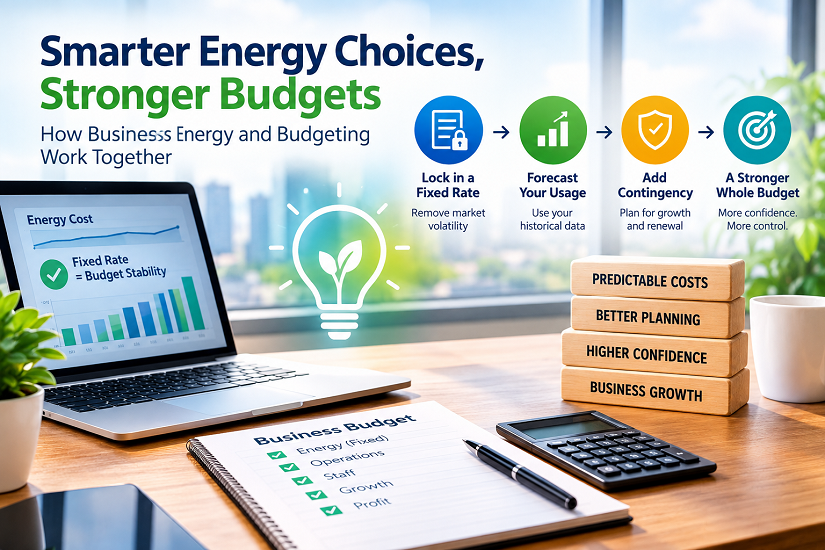
The most powerful tool for making energy predictable is a fixed rate contract. By locking your unit price for the term, a fixed rate removes market volatility from your energy cost. Whatever happens in the wider market, your rate stays the same, so you can budget your energy cost with confidence for the length of the contract. This transforms energy from an unpredictable variable into a known quantity.
Securing a competitive fixed rate is therefore not just about saving money, it is about budget stability. Taking time to compare business energy across suppliers lets you find a competitive fixed rate to lock in, giving you both a good price and the predictability your budget needs. With the price fixed, the main remaining variable is your usage, which is far more within your control.
Forecasting Your Usage
With the price fixed, budgeting for energy becomes a matter of forecasting your usage. Using your historical consumption, ideally annual figures that capture seasonal patterns, you can estimate how much energy you will use and multiply it by your known rate to project your cost. For a business with seasonal variation, building that pattern into the forecast produces a more accurate month by month picture.
This is far more reliable than trying to forecast an uncertain price and uncertain usage together. By fixing the price, you reduce the problem to forecasting usage alone, which you can do reasonably well from your own history. The result is an energy budget you can actually trust.
Stress Testing and Contingency
Even with a fixed rate, sensible budgeting includes some contingency. Usage can rise if your business grows or has an unusually busy period, so it is wise to allow some room in your forecast. Thinking ahead to your contract’s end date is also part of good budgeting, since your rate will be re-set at renewal, and market conditions then may differ from now. Building awareness of your renewal into your longer term financial planning avoids being caught out when the contract ends.
This forward looking approach means energy never becomes a nasty surprise. You know your cost during the contract, you allow for usage variation, and you plan ahead for renewal, so the cost stays firmly within your control.
Energy’s Role in the Wider Budget
Making energy predictable strengthens the whole budget. When one of your larger costs is a known quantity rather than a variable, the rest of your financial planning rests on firmer ground. You can forecast profit more accurately, plan investment with more confidence, and respond to other pressures knowing your energy cost is stable. In this way, managing energy well is not just about the energy line, it improves the reliability of the entire budget.
Frequently Asked Questions
Why is energy hard to budget for?
Because the price is exposed to a volatile market and usage varies with activity and seasons. Together these make energy a moving target compared with truly fixed costs.
How does a fixed rate help my budget?
It locks your unit price for the term, removing market volatility from your energy cost. This turns an unpredictable variable into a known quantity you can budget with confidence.
How do I forecast my energy usage?
Use your historical consumption, ideally annual figures capturing seasonal patterns, and multiply by your known rate. Fixing the price reduces the task to forecasting usage alone.
Should I include contingency even with a fixed rate?
Yes. Usage can rise with growth or busy periods, so allow some room, and plan ahead for your renewal when the rate will be re-set under possibly different market conditions.
How does predictable energy help the wider budget?
When a large cost is known rather than variable, the whole budget rests on firmer ground, letting you forecast profit and plan investment with more confidence.
Final Thought
Energy does not have to be the unpredictable element in your budget. By fixing your price through a competitive contract, you remove market volatility, reducing the task to forecasting your usage, which you can do from your own history. Add sensible contingency and plan ahead for renewal, and energy becomes a known, manageable cost. That predictability does not just help the energy line, it strengthens the reliability of your entire budget.