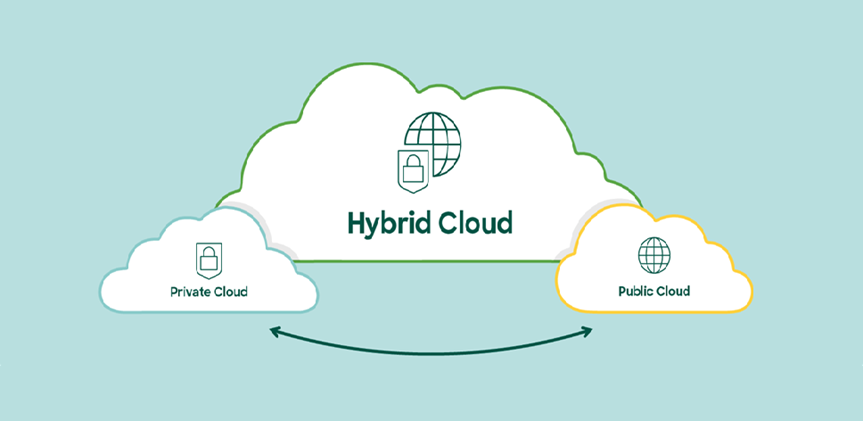

Few organizations live entirely in one place anymore. Workloads sit in a private data center, spill into one or more public clouds, and often touch edge locations in between. This hybrid reality delivers flexibility, but it also fractures the picture security teams depend on. A control that works beautifully inside the data center may have no equivalent in a public cloud, and a policy enforced in one environment can quietly lapse in another. The hard part of hybrid security is not protecting any single location. It is keeping protection consistent as workloads move across all of them.
The five providers below are chosen specifically for how well they span that divide. Some come at it from a network heritage, others from cloud-native visibility or exposure management, but each is built to treat a mixed estate as one environment rather than several. The list opens with a vendor known for unifying policy across boundaries, then looks at four others that approach the same challenge from distinct angles.
1. Fortinet: Consistent Policy Across Boundaries
Fortinet’s appeal in hybrid settings comes from its emphasis on applying the same rules everywhere, whether a workload runs on a physical appliance in the data center or inside a public cloud tenant. Rather than maintaining separate policy sets that drift apart over time, teams define intent once and let it follow the workload. That consistency closes the seams between environments where misconfigurations and coverage gaps usually hide.
Organizations mapping out a mixed estate can start by reviewing cloud security solutions for hybrid deployments to see how unified policy and centralized visibility extend from on-premises systems into the public cloud.
The single-fabric approach also simplifies the day-to-day work of running security, since a single console and a single telemetry body replace the patchwork that hybrid estates tend to accumulate.
2. VMware: Infrastructure-Level Consistency
VMware built its reputation on abstracting infrastructure so that the same operational model works across private and public clouds, and its security capabilities extend that idea to protection. For organizations whose hybrid strategy is anchored in a common virtualization layer, securing workloads through the same platform that runs them can significantly reduce friction.
It helps to be precise about what hybrid even means before comparing tools, since the term gets stretched in marketing. An official definition document describing the recognized deployment models provides a neutral baseline so you can judge whether a provider’s idea of hybrid aligns with the architecture you actually run.
3. Wiz: Cloud-Native Visibility
Wiz focuses on giving teams a clear, prioritized view of risk across cloud environments without relying on agents everywhere. Its strength lies in connecting the dots among misconfigurations, exposed workloads, and the paths an attacker could actually take, which is especially valuable when assets are scattered across multiple clouds. Organizations struggling to see their full cloud footprint, let alone secure it, often turn to this kind of broad visibility as a first step toward control. Once teams can see how exposures chain together, they can fix the handful that matter most rather than drowning in a long, undifferentiated list of alerts.
4. Tenable: Exposure Across the Estate
Tenable approaches hybrid security through the lens of exposure management, continuously identifying weaknesses across both traditional infrastructure and cloud resources. Its heritage in vulnerability assessment translates well to mixed environments, where a single unpatched system or misconfigured service can become the weak link. Teams that want a unified view of where they are exposed, regardless of where an asset lives, value the breadth of coverage it brings to the hybrid picture.
5. Google Cloud: Native Protection With Reach
Google Cloud offers protection that begins with its own platform and extends to workloads running elsewhere, reflecting the reality that few customers run everything in a single cloud. Its tooling emphasizes centralized findings and threat detection that can take in signals from across a distributed estate. For organizations whose hybrid strategy leans on this platform as an anchor, building protection from the same place that hosts key workloads can streamline both operations and oversight. The closer protection sits to where workloads already run, the less translation effort teams spend stitching signals together by hand.
Questions to Ask Before You Commit
The right provider depends on the shape of your particular estate. Start by asking where your workloads actually run today and where they are likely to move next, then test each candidate against the environments that matter most rather than a generic checklist. A provider strong in one public cloud may be thin in another, and a tool that shines on cloud-native workloads may struggle with legacy systems in the data center.
It also pays to ground the conversation in recognized expectations rather than vendor claims. Working through a government guidance page on the principles a sound cloud service should meet gives you a vendor-neutral yardstick, so you can press each provider on concrete capabilities instead of slogans.
Finally, weigh the cost to your team for each option. Hybrid estates already carry operational complexity, and a tool that adds another console and another skill set to maintain can erode the very consistency you are trying to achieve. The strongest fit is the one that makes a mixed environment feel like a single one to the people defending it.
Frequently Asked Questions
What makes hybrid cloud security harder than single-environment security?
Controls and policies rarely translate cleanly between on-premises and public cloud. Gaps appear where one environment lacks an equivalent for another’s safeguards. Keeping protection consistent across both is the central challenge.
Should I use one provider or several for a hybrid estate?
A single platform that spans environments usually reduces gaps and overhead. Some organizations still add a specialist for a particular cloud or workload type. The right balance depends on how varied your estate is.
How do I compare providers that all claim hybrid support?
Test each one against the specific environments you run rather than general claims. Ask for concrete coverage details per cloud and for legacy systems. Grounding the comparison in recognized principles helps cut through marketing.